
Douglas County Criminal Court Records
A Douglas County criminal court record is the court case file, not just the arrest event. It begins to take shape when a charge is filed, accused, indicted, placed on a calendar, or otherwise opened in court. The record may include the charging document, arraignment entry, bond order, motions, hearing notices, plea, verdict, disposition, sentence, fine and cost records, probation terms, and attorney entries. For charge-focused records before or just after arrest, the separate arrest records and court charges page is the better fit.
Superior Court handles Douglas County felony criminal cases. State Court handles misdemeanor criminal cases and county traffic prosecutions. Magistrate Court matters can appear earlier in the process through bond hearings, preliminary hearings, and some pre-arrest warrant hearings. Municipal courts in Douglasville, Villa Rica, and Austell handle city traffic, ordinance, and certain misdemeanor matters. The Clerk of Superior and State Courts keeps the main Superior and State case files.
The Douglas County District Attorney page identifies the local felony prosecution office tied to Superior Court criminal case records.
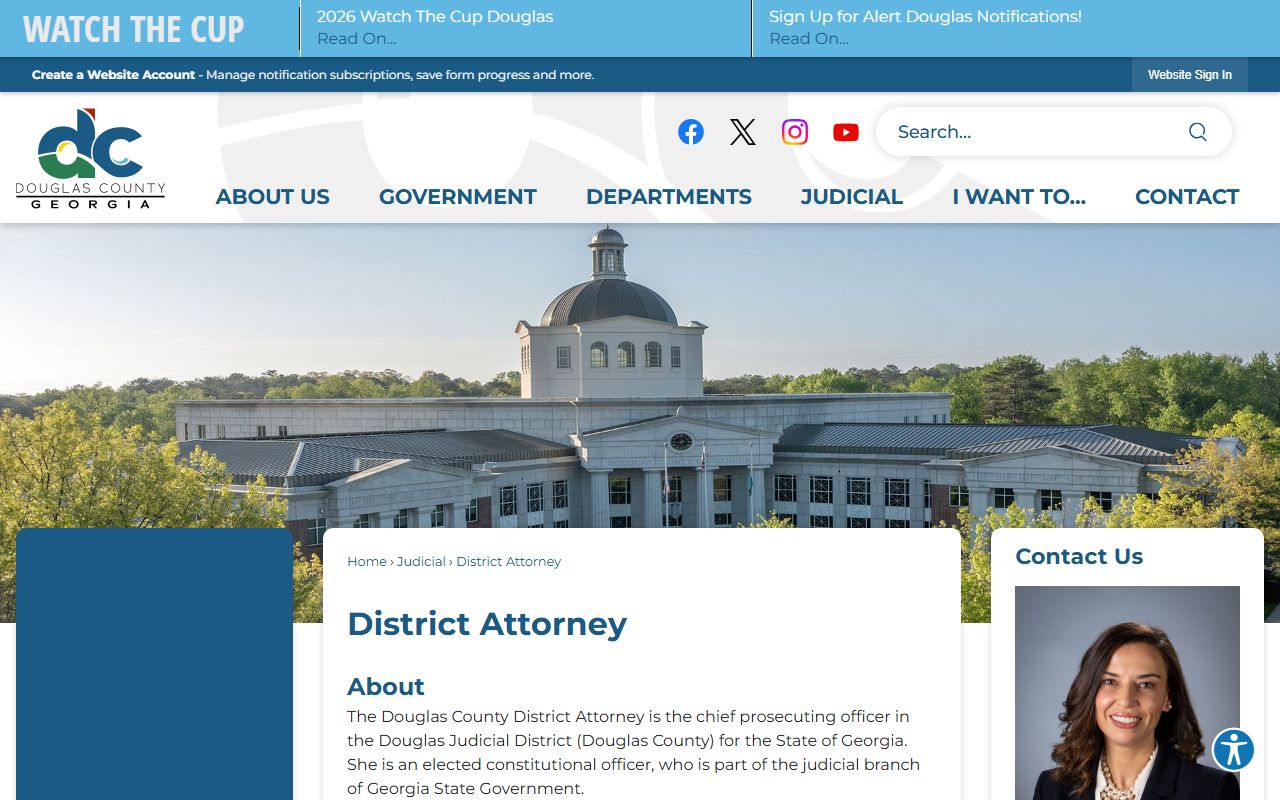
The District Attorney connection matters because felony case files often list prosecutor names and felony charge stages.
Search Douglas County Criminal Court Records
The main online path for Douglas County criminal court records is the clerk-linked Superior and State Court public search. Use it for Superior Court felony case lookup and State Court misdemeanor case lookup where public access is available. The county's search instruction says to enter names as LAST NAME, FIRST NAME. Case-number searching is often stronger when the number is known, especially for criminal numbers with CR and suffix letters.
- Decide whether the matter is a Superior Court felony, State Court misdemeanor, Magistrate hearing, or municipal case.
- Open the official public search through the Clerk of Superior or State Court pages.
- Search by exact case number or by defendant name in LAST NAME, FIRST NAME format.
- Read the docket for arraignment, motions, plea, trial, disposition, sentencing, and attorney fields.
- Call the clerk or records room if the online entry does not show the document or certified copy needed.
Statewide criminal-history and offender searches are separate from a Douglas County criminal court record. Georgia's criminal-history restriction rules are handled through the GBI framework, while state prison or probation searches use Georgia Department of Corrections tools. Those systems can help with background context, but the official case outcome still comes from the court file.
The District Attorney's official site provides another source for the local felony-prosecution role in Douglas County.

Felony case searches should be read with that prosecution role in mind, because prosecutor entries may appear on calendars and docket records.
Stages of a Criminal Case
Douglas County criminal court records often make more sense when read as a sequence. A charge may begin with an arrest, warrant, citation, accusation, or indictment, but the court record matures through arraignment, pretrial filings, motions, plea negotiations, trial, disposition, and sentencing. Bond and preliminary-hearing activity may start in Magistrate Court, then felony matters move through Superior Court and misdemeanors through State Court or municipal court depending on the source of the charge.
Case flow: Charges Filed › Arraignment › Pretrial / Motions › Plea or Trial › Disposition › Sentencing
| Stage | What Happens |
|---|---|
| Charges Filed | An accusation, indictment, warrant-related entry, citation, or complaint starts the criminal case path. |
| Arraignment | The defendant is formally advised of charges and enters a plea. |
| Pretrial / Motions | Attorneys file requests, argue evidence issues, and prepare the case for plea or trial. |
| Plea or Trial | The case ends by plea, bench trial, jury trial, dismissal, or another court-approved disposition. |
| Sentencing | The court enters jail, prison, probation, fines, costs, restitution, conditions, or other sentence terms. |
The District Attorney who-we-are page states that the office prosecutes felony offenses in Superior Court of Douglas County.

That source supports the court split between felony case records in Superior Court and misdemeanor records in State Court.
Douglas County Criminal Record Fields
Official Douglas County calendar material showed criminal case fields that help explain a full court record. The case caption may read State of Georgia versus the defendant. The case number can identify the filing year and criminal sequence. Calendar entries may include date filed, hearing type and time, judge, jail-confinement status, incarceration date, charges, offense dates, counts, felony or misdemeanor labels, District Attorney, and attorney for defendant. The full file can add motions, orders, plea paperwork, sentence terms, and financial entries.
| Field | What It Shows |
|---|---|
| Case Number | Unique clerk identifier, sometimes with CR and a suffix letter. |
| Defendant | The person charged in the criminal case caption. |
| Charges | Offense name, count, statute or code reference, date, and felony or misdemeanor class when shown. |
| Plea | Formal response such as guilty, not guilty, nolo, or another court-accepted plea. |
| Disposition | Final charge or case outcome, including conviction, dismissal, acquittal, or other result. |
| Sentence | Jail, prison, probation, fines, restitution, court costs, and conditions ordered by the court. |
The Solicitor-General page identifies the prosecutor for Douglas County misdemeanor and traffic offenses in State Court.
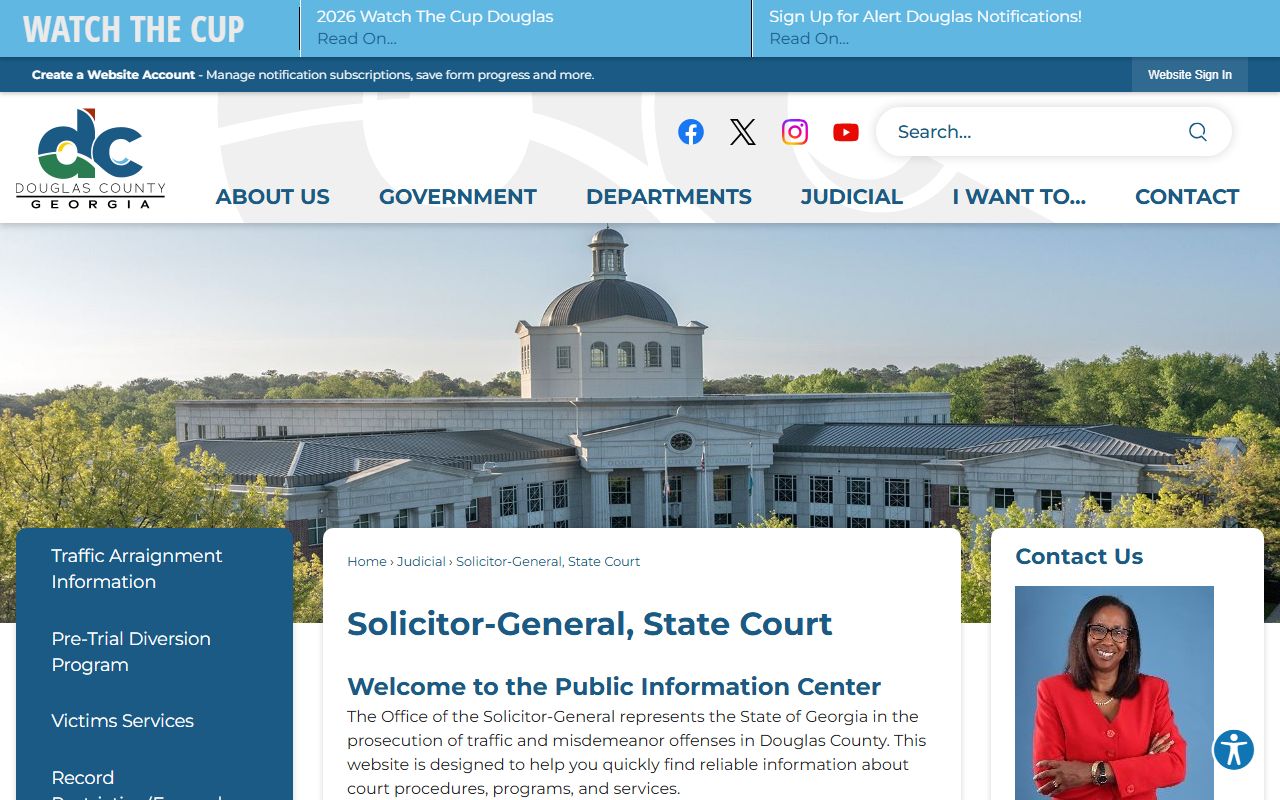
Misdemeanor criminal court records should be read with the Solicitor-General role in mind, especially where traffic and misdemeanor charges overlap.
Charges vs. Convictions
A charge is an allegation filed by law enforcement or a prosecutor. A conviction is a final outcome after a guilty plea, verdict, or other court finding that results in conviction. Douglas County criminal court records can show charges that were later amended, reduced, dismissed, not prosecuted, or resolved without conviction. For the exact charge path after arrest, use the charge-focused page; for the final court outcome, use the criminal court case record.
| Charge | Conviction | |
|---|---|---|
| Stage | Filed or alleged before final outcome | Entered after plea, verdict, or qualifying finding |
| Meaning | The state claims an offense occurred | The court record reflects a final conviction result |
| Record impact | May remain visible even if dismissed unless restricted | May affect sentencing, probation, fines, and criminal history |
Reading Dispositions and Sentences
A disposition is the result of a charge or case. It may show guilty, not guilty, dismissed, reduced, amended, nolle prosequi, acquitted, dead docketed, first offender, or another Georgia court outcome. A sentence is the court's punishment or supervision order. In Douglas County criminal court records, sentence terms may include jail, prison, probation, fines, costs, restitution, bond conditions, treatment programs, or accountability-court participation.
Douglas County also has specialty criminal programs that may affect the case path. Judge Deah B. Warren presides over a Felony Drug Court division. Judge Lauren Wallace is tied to Veterans Court, Opioid Court, and the Daily Reporting Center. Judge Brian K. Fortner oversees the Moderate Risk track of the county's misdemeanor DUI and Drug Accountability Court. Program participation can affect supervision and sentencing, but medical, treatment, and compliance details may not be public.
Sealed vs. Expunged Records
Georgia commonly uses the term record restriction for public-access limits on qualifying criminal-history records. A restricted record is not the same as a public court docket with every detail visible, and it is not always the same as physical destruction of a court file. Juvenile matters, adoption-related records, mental-health materials, Social Security numbers, account numbers, and minor identifying information can also be withheld or redacted.
| Sealed | Expunged | |
|---|---|---|
| Visibility | Limited from public case or criminal-history access by law or order | Not the normal Georgia term for most criminal-history restriction requests |
| Access | Courts and criminal-justice agencies may still have access | Depends on statute, order, and record type |
| Eligibility | Often tied to non-convictions, eligible categories, or first-offender rules | Requires specific legal authority, not a simple portal request |
Public Access to Criminal Court Records
Georgia's Open Records Act resources state that public records are generally presumed open, but Douglas County criminal court records are also controlled by court rules, sealing orders, juvenile confidentiality, redaction duties, and criminal-history restriction law. A person should request the case file from the court custodian rather than from the arresting agency when the need is a plea, disposition, sentence, or certified criminal court record.
Key Statutes:
O.C.G.A. 50-18-70 et seq. - Georgia's open-records law supports public access unless an exception applies.
O.C.G.A. 35-3-37 - Georgia's criminal-history record restriction framework limits access to qualifying records.
The Public Defender page identifies the local defense office for people prosecuted in State and Superior Courts who qualify for appointed counsel.
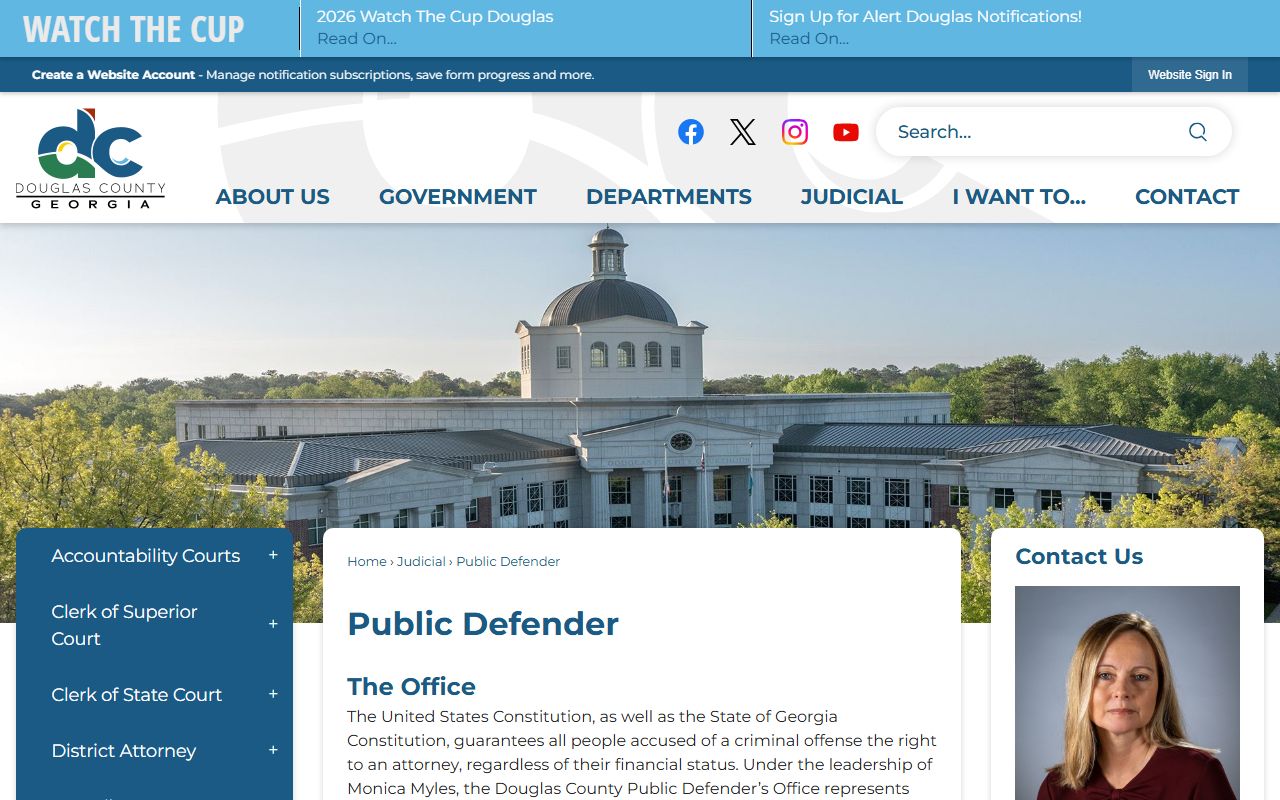
Defense representation can appear in docket attorney fields, calendar entries, motions, and sentencing records.
Background Check Considerations
A Douglas County criminal court records lookup is not the same as a regulated employment, tenant, credit, insurance, or licensing background check. Court files can be incomplete online, may lag behind clerk action, and may show charges without the final case result if the docket is not read carefully. For a formal criminal-history issue, use the appropriate Georgia criminal-history channel and verify disposition with the clerk that maintains the court record.
Important: Court lookup results should not be used as a consumer report for FCRA-regulated decisions.
Restricted Douglas County Criminal Records
Restricted Douglas County criminal court records include juvenile matters, sealed records, first-offender limitation matters, qualifying criminal-history restriction cases, and records with confidential personal data. Active investigative material held by law enforcement may also be withheld or redacted even when the court docket is public. If a criminal court record appears incomplete, contact the Clerk of Superior and State Courts or the relevant court before treating the missing item as proof that no case action occurred.
The GBI record-restriction page explains the statewide framework for limiting public criminal-history access in qualifying cases.
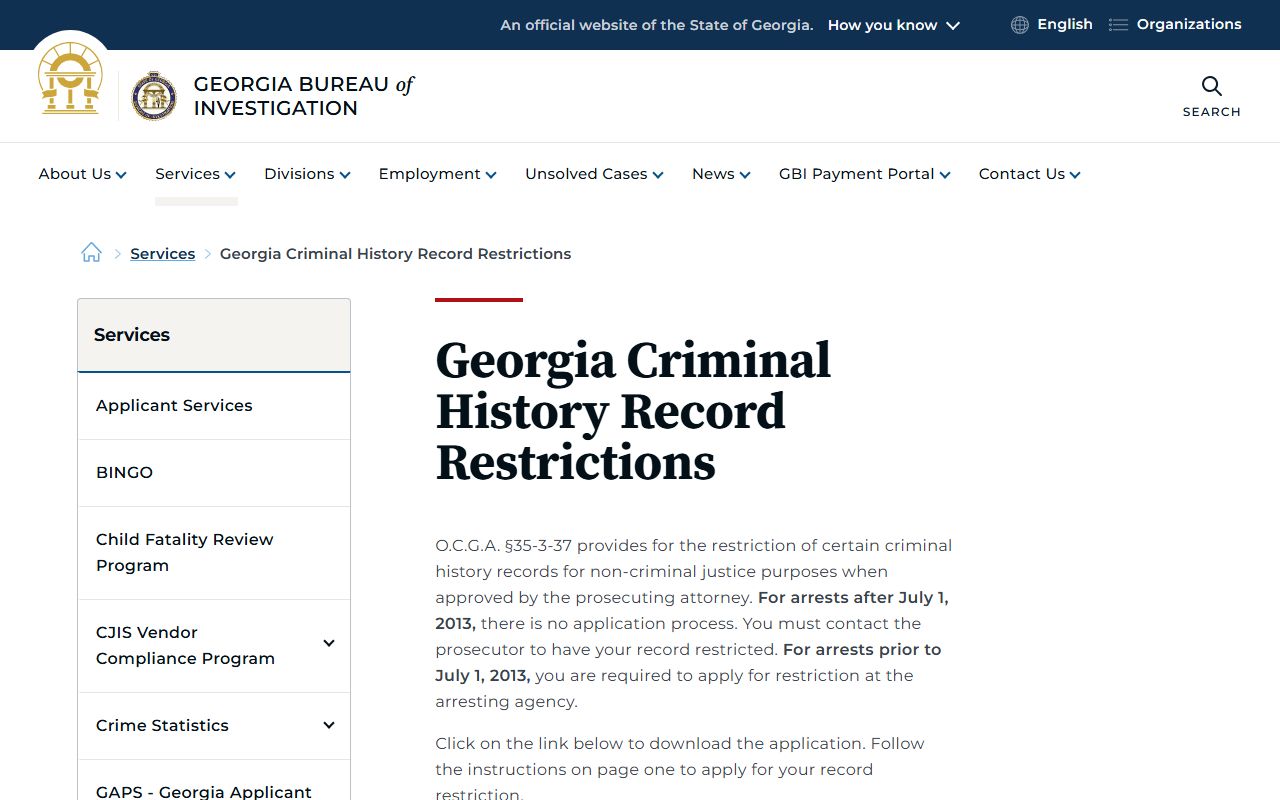
That process is separate from simply searching the Douglas County court docket, and it may require prosecutor, agency, or court action.