
How to Search Douglas County Court Records
Most public case lookup for Douglas County court records starts with the Clerk of Superior and State Courts or the Clerk of State Court. Both clerk pages point users to the official Douglas County Superior and State Court public search. The county's own instruction is short but important: name searches should be entered as LAST NAME, FIRST NAME. A first-name-first search can miss the same Douglas County court record even when the case is public.
Before using the portal, decide whether the case belongs in Superior Court, State Court, Magistrate Court, Probate Court, or a city municipal court. Superior Court handles felony cases, divorces, custody, title-to-land matters, equity cases, and major civil disputes. State Court keeps misdemeanor, civil, and county traffic citation records. Magistrate Court handles claims under $15,000, dispossessory cases, garnishments, personal property foreclosure matters, bond hearings, preliminary hearings, and some pre-arrest warrant hearings. Probate and city court records use separate access paths.
- Identify the court level from the ticket, complaint, summons, indictment, calendar notice, or other case paper.
- Open the clerk-linked public search at courts.dcga.us for Superior, State, and linked Magistrate civil records.
- For a party search, enter the name as LAST NAME, FIRST NAME. For a case-number search, copy the number exactly from the court paper.
- Review the result for case number, caption, filing date, court, judge, status, hearing, and disposition clues.
- If the document image, certified copy, or full file is not available online, contact the correct clerk or records room.
The public case search screenshot in the project image set shows the clerk-linked portal that supports the search process for many Douglas County court records.
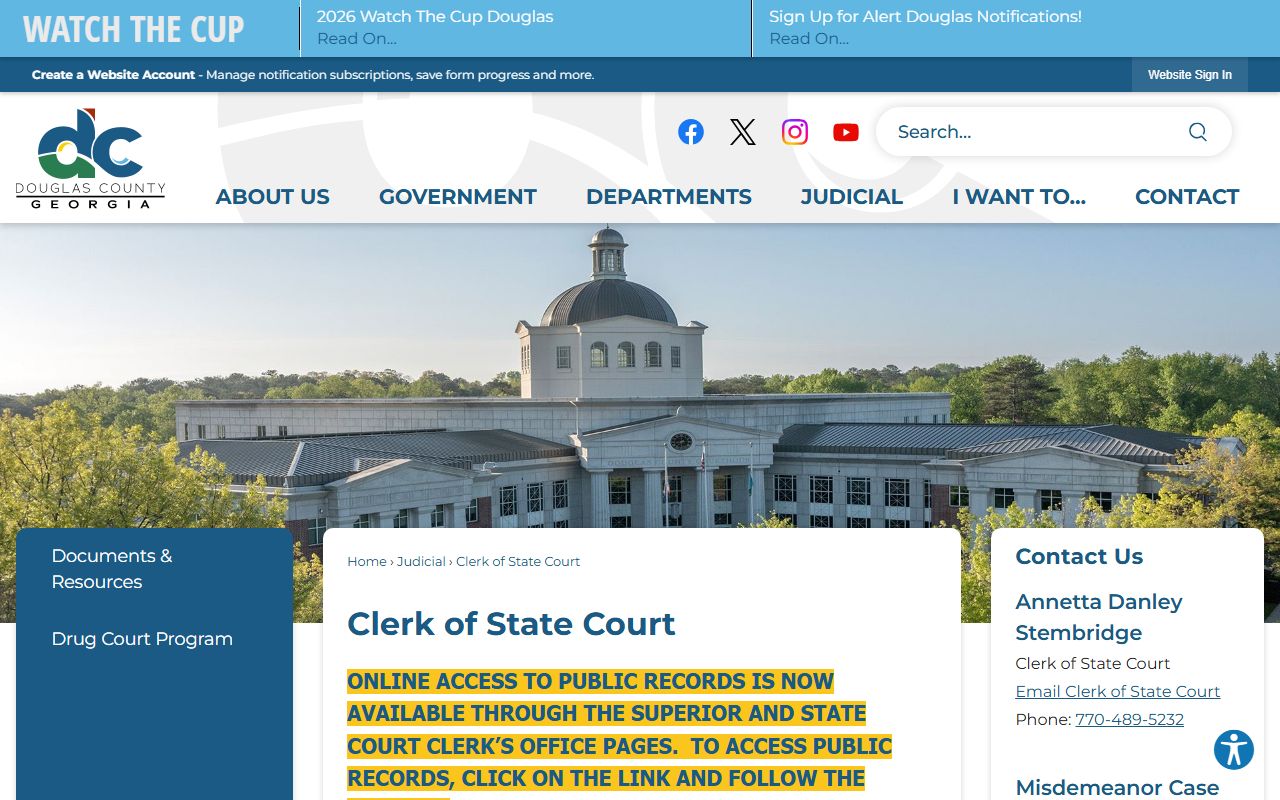
The county clerk pages should be treated as the starting point because they also identify which office keeps each record set.
Douglas County Court Records Search Fields
The WebSearch portal did not expose every field through static inspection, but the research file captured the official field guidance available from Douglas County. The most reliable fields are party name and case number. For criminal calendars, examples in county materials use case numbers such as 21CR01020-A, 22CR00077, and 20CR00067-A. Those formats should be copied as shown because a missing suffix or transposed digit can lead to a failed Douglas County court records lookup.
| Field Label | Type | Required | Notes / Format |
|---|---|---|---|
| Name | Text | Unspecified | County instruction: LAST NAME, FIRST NAME. |
| Case Number | Text | Unspecified | Use the exact number from court papers, including letters or suffixes. |
| Court or Search Type | Link or tab | Unspecified | Superior, State, and linked Magistrate civil access may route through the same host. |
| Search Prompts | Button or process | Yes to run search | The clerk page says to click the link and follow the prompts. |
The Clerk documents page is a useful second stop when the court record search leads to a filing, summons, garnishment, or process-server form rather than a simple case lookup.
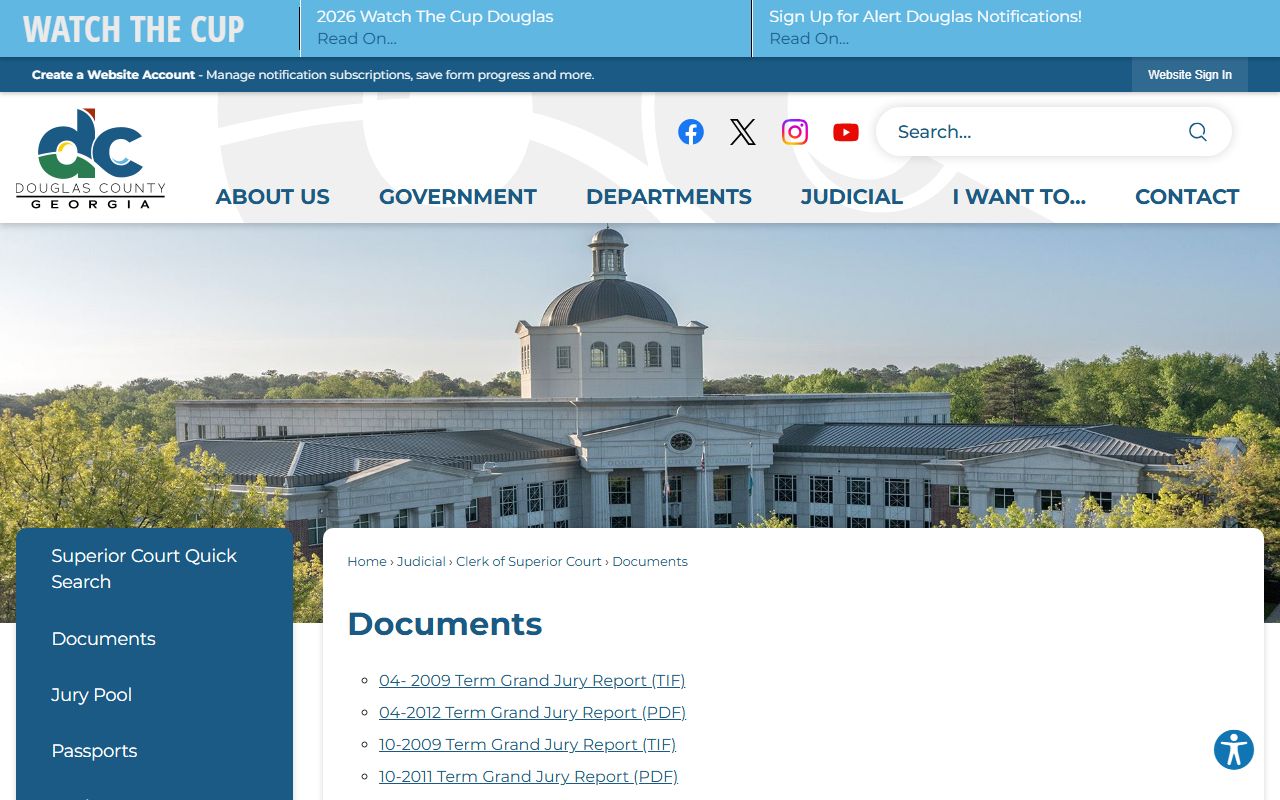
Forms and fee sheets help confirm whether a record request must be filed, mailed, notarized, or handled at the courthouse counter.
Types of Douglas County Court Records
Douglas County court records are not one single file group. Civil records can include complaints, answers, summonses, service returns, motions, orders, judgments, garnishments, writs, and Fi Fa entries. Criminal records can include warrants, accusations, indictments, charges, arraignment calendars, pleas, motions, bond orders, dispositions, sentences, probation terms, fine and cost records, and attorney entries. Domestic cases, including divorce and custody, are Superior Court records, while probate and marriage records are maintained by Probate Court.
Traffic records require special care. County State Court traffic citations use the Clerk of State Court and the PayYourTix route, while city-issued cases from Douglasville, Villa Rica, and Austell sit with municipal courts and city payment vendors. A Douglas County court records search should also account for Magistrate Court civil matters, protective orders, small claims, evictions, and early criminal hearings. Juvenile files are a separate restricted category and should not be treated like adult public case files.
- Superior Court records: felony, divorce, custody, equity, land-title, and major civil files.
- State Court records: misdemeanor, State Court civil, and county traffic citation files.
- Magistrate Court records: claims under $15,000, dispossessory cases, garnishments, bond hearings, and preliminary hearings.
- Probate Court records: estates, wills, guardianships, marriage licenses, birth and death certificates, and weapons-carry matters.
- Municipal court records: city traffic, ordinance, code, and certain misdemeanor cases from Douglasville, Villa Rica, and Austell.
What Douglas County Court Records Show
Douglas County court records usually identify the case, the court, the judge, the parties, and the current status. Criminal calendars reviewed in the research showed fields for case number, case caption, filing date, hearing type, hearing time, judge, incarceration date, charges, counts, felony or misdemeanor labels, District Attorney, and defense attorney. Civil files may show pleadings and judgments rather than charges. Probate files may show estate, will, guardian, or vital-record licensing details instead of adversarial case events.
| Field | What It Shows |
|---|---|
| Case Number | The unique identifier, often with year, case type, sequence, and sometimes a suffix letter. |
| Case Caption | The official case title, such as State of Georgia versus a named defendant in criminal matters. |
| Filing Date | The date the case or filing entered the court record. |
| Court and Judge | The court level and judicial officer assigned to the matter. |
| Hearing Type | Arraignment, bond hearing, preliminary hearing, motion hearing, trial, or other scheduled event. |
| Disposition | The outcome of a case or claim, such as judgment, dismissal, plea, verdict, or sentence. |
The Clerk records and services page also points users toward record services and temporary protection order support contacts when the record involves safety-related Superior Court relief.
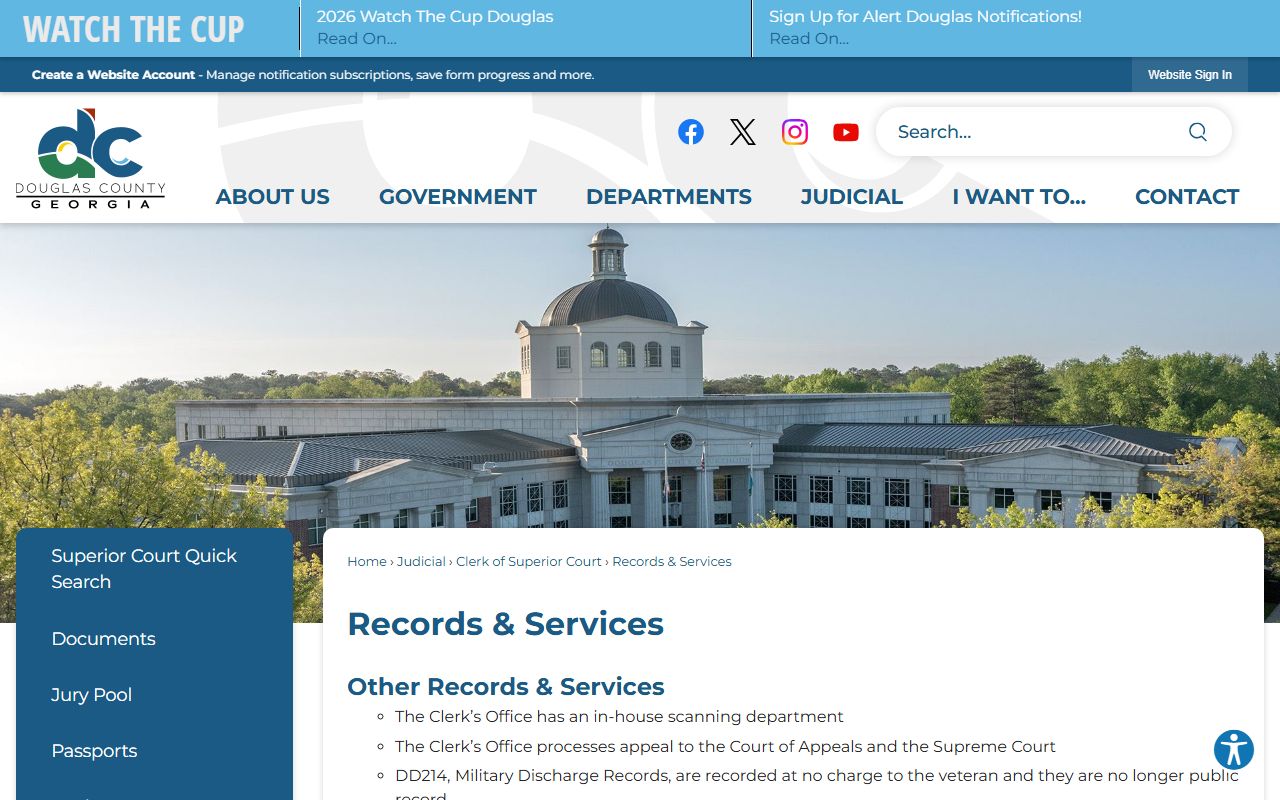
That office-level context matters because protective-order, civil, and criminal records may have different access limits and urgency.
Public Access for Douglas County Court Records
Georgia's open government law and the Attorney General's Open Records Act materials explain that public records are generally presumed open, with exceptions read narrowly. For Douglas County court records, the practical rule is to start with the custodian that keeps the file. Superior and State Court files go to the Clerk of Superior and State Courts. Magistrate civil files route through Magistrate Court and linked public access. Probate, estate, guardianship, marriage, birth, and death records go to Probate Court.
Court records are also governed by court-specific rules. Uniform Superior Court Rule 21 recognizes public access to court files but provides a procedure for limiting access when law or court order allows it. The Georgia Judicial Branch retention schedules define court records and retention rules. Fees, certified copy rules, and mailing steps depend on the court and document type.
Note: A public-record request does not override sealing orders, juvenile confidentiality, redaction rules, or record-restriction law.
The Georgia open government source supports the public-access framework used when a Douglas County court record is not available online.
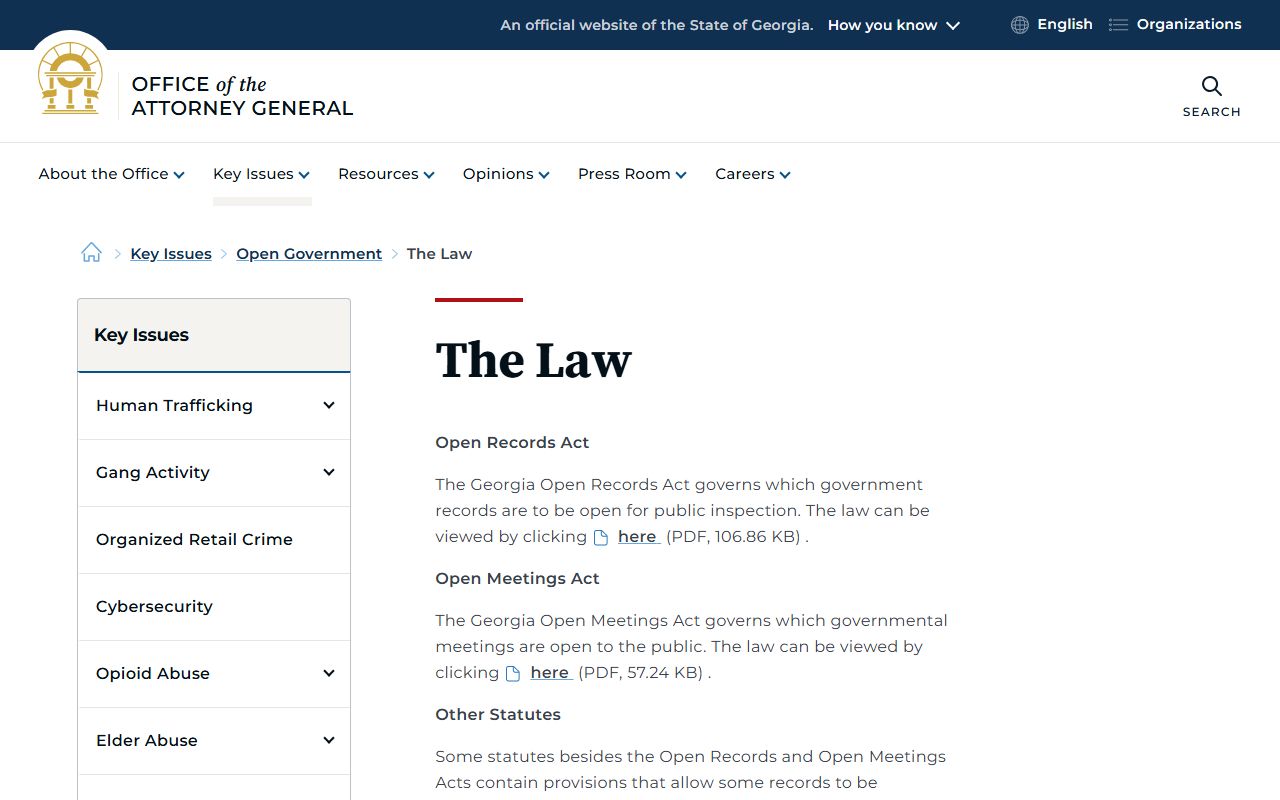
Open-records law is a fallback path, but the fastest route is still the clerk or court that keeps the original file.
Sealed Douglas County Court Records
Some Douglas County court records are public only in part or are not public at all. Juvenile delinquency, CHINS, dependency, and related files are not handled like adult criminal case records. Adoption files, mental-health and involuntary-treatment materials, protected addresses, Social Security numbers, financial account numbers, and records involving minors can be sealed, withheld, or redacted. First-offender and record-restriction matters can also limit what appears in public criminal-history searches.
Georgia's O.C.G.A. 35-3-37 record restriction process can limit public access to qualifying criminal-history information. A person seeking restriction should confirm the Douglas County case number and disposition first, then work through the prosecutor, arresting agency, clerk, or court order process that applies. A restricted record is not always destroyed. Courts, law enforcement, and criminal-justice agencies may retain access when the law allows it.
In-Person Court Record Requests
In-person Douglas County court record requests go to the office that keeps the file. The Clerk of Superior and State Courts is at the Douglas County Courthouse, 8700 Hospital Drive, Douglasville, Georgia 30134. The Superior Court clerk phone is 770-920-7252, the State Court clerk phone is 770-489-5232, and the shared records room number listed in the research is 770-920-7441. Posted clerk hours are Monday through Friday, 8:00 a.m. to 5:00 p.m.
Bring the case number if possible. If no case number is known, bring the party name in the county search format, the approximate filing year, the court level, and the document type needed. Certified copies should be requested from the clerk rather than printed from an online search result. Magistrate filings have stricter paper rules: original pleadings, original signatures, notarization where required, and a self-addressed stamped envelope, with no faxed or emailed pleadings accepted.
For sheriff accident reports, offense reports, or jail-related law-enforcement records, use the Sheriff's Office records process rather than the court clerk. For Probate Court estate or marriage records, use Probate Court and Georgia Probate Records. That routing step prevents a common Douglas County court records problem: one office may know the case context, but another office is the legal custodian of the copy or certified file.
Clerk of Superior and State Courts
8700 Hospital Drive
Douglasville, GA 30134
770-920-7252
Monday-Friday, 8:00 a.m.-5:00 p.m.