
Douglas County Court Dockets
A docket is the running case log kept by the court. In Douglas County, docket material may show the case number, case caption, filing date, court, judge, hearing type, hearing time, party names, attorney names, charges in criminal matters, and status notes such as jail confinement or bond-related entries. A docket can tell a reader what has happened and what is scheduled next. It may not include every motion, exhibit, order image, or certified copy.
Georgia does not use a county "district court" label for Douglas County. The general-jurisdiction trial court is Superior Court, while State Court handles misdemeanor, traffic, and certain civil matters. Magistrate Court handles small claims, dispossessory cases, garnishments, bond hearings, preliminary hearings, and pre-arrest warrant hearings. Probate Court and municipal courts keep their own calendars or office processes. That court split is the key to finding Douglas County court dockets without searching the wrong system.
Docket records are also time-sensitive. A hearing may be set, reset, continued, or removed after an online search result is viewed. For a required appearance, the official court notice, citation, appearance bond, or direct clerk confirmation should control. This is especially true for traffic arraignments, bond hearings, and preliminary hearings because missing court can create bench-warrant, bond-forfeiture, or license consequences.
The Clerk of Superior Court directory identifies the Superior Court clerk contact point for docket questions tied to felony, divorce, custody, land, equity, and larger civil cases.
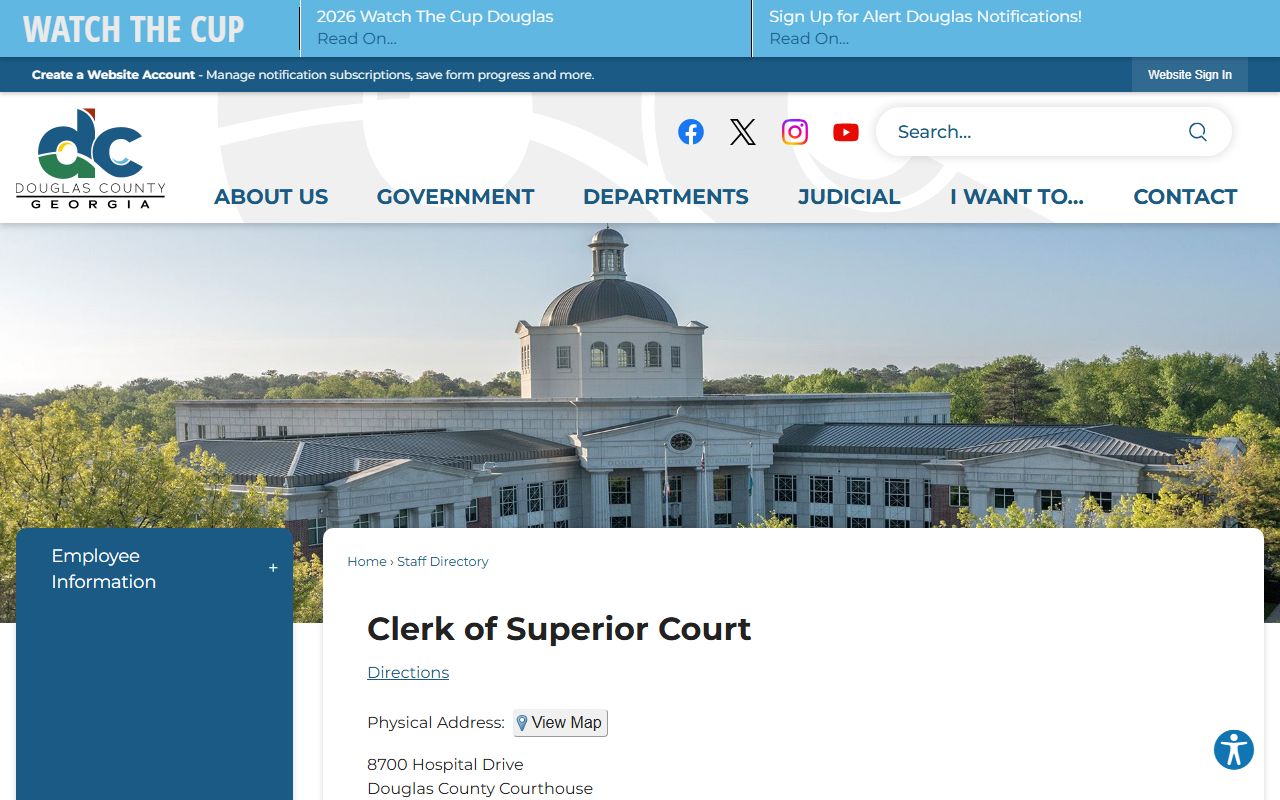
That clerk contact is the fallback when the public portal does not show the hearing entry or case calendar needed.
Find Douglas County Court Dockets Online
The primary online route for many Douglas County court dockets is the clerk-linked Superior and State Court public search. The Clerk of Superior Court and Clerk of State Court pages both point to that public record link, and the county instructs name search users to enter names as LAST NAME, FIRST NAME. The same host is also linked from Magistrate Court for civil record access, though not every docket or document is guaranteed to appear online.
If a docket search fails, try the fallback chain before assuming no case exists. Call the Superior Court clerk for felony, divorce, custody, equity, land, and major civil calendars. Call the State Court clerk for misdemeanor, State Court civil, and county traffic calendars. Call Magistrate Court for small claims, dispossessory, garnishment, bond, preliminary, or pre-arrest warrant hearings. For city police citations, contact the city court listed on the ticket.
- Use the case paper or citation to identify Superior, State, Magistrate, Probate, or municipal court.
- For Superior, State, and linked Magistrate civil access, open the official WebSearch portal from the clerk page.
- Search by case number when possible. If using a name, use LAST NAME, FIRST NAME.
- Review hearing type, hearing time, status, judge, attorney, and disposition fields when shown.
- If the case is a city citation, check Douglasville, Villa Rica, or Austell Municipal Court instead of the county portal.
The Clerk of State Court directory is the local contact route for State Court misdemeanor, civil, and traffic docket questions.
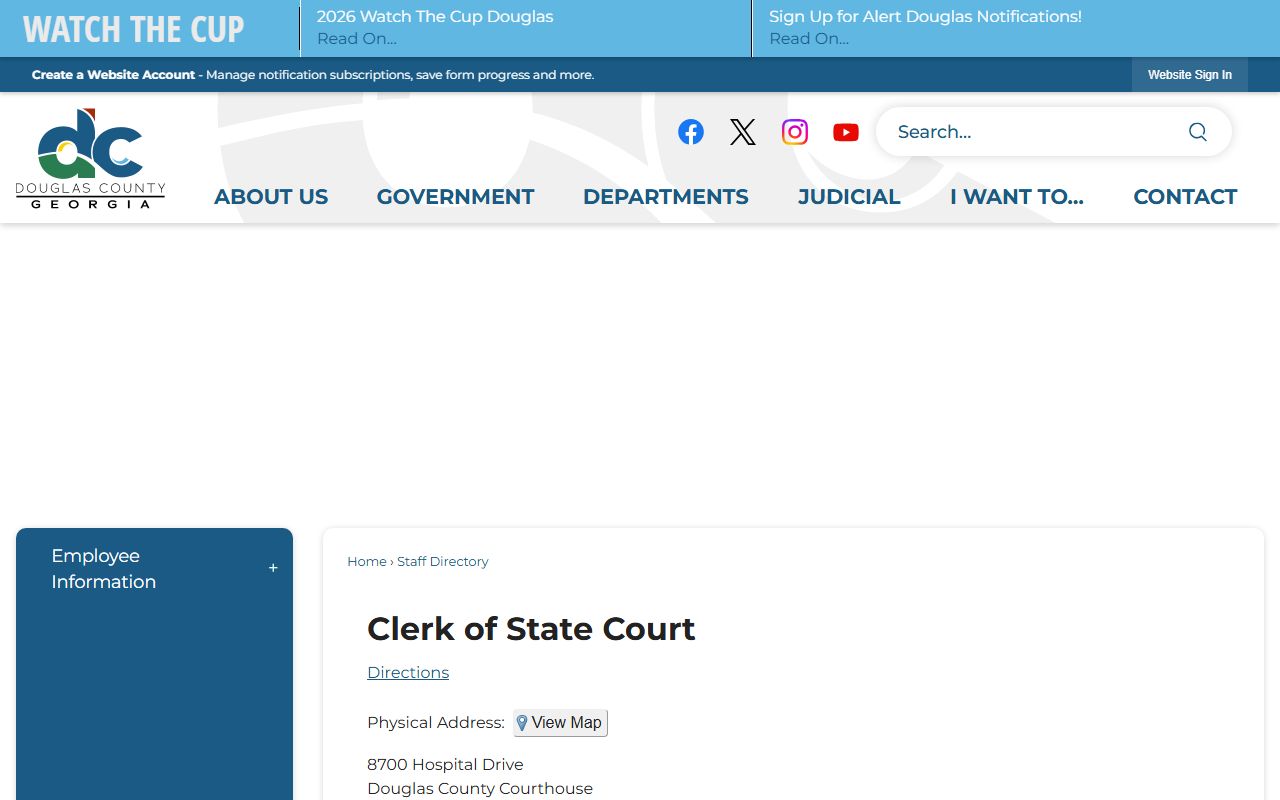
State Court docket questions often overlap with traffic arraignments, misdemeanor prosecutions, and civil files assigned to that court.
Sample Douglas County Docket Entry
Research from official Douglas County calendar material showed criminal docket and calendar fields that are more detailed than a bare case list. Entries can identify the case number, case caption, filing date, hearing type, judge, status, incarceration date, charges, count, felony or misdemeanor class, District Attorney, and attorney for defendant. The docket is especially useful for deciding whether a case is pending, set for arraignment, tied to a bond issue, or already disposed.
Some fields are clues rather than final answers. A charge line may describe an allegation, not a conviction. A jail-confinement status may explain why the hearing is on a criminal calendar, but custody status should still be verified with the jail roster or sheriff. Attorney fields can change when a public defender is appointed, private counsel appears, or a defendant proceeds without counsel.
| Field | What It Shows |
|---|---|
| Case Number | Examples include 21CR01020-A, 22CR00077, and 20CR00067-A. |
| Case Caption | The official case title, often State of Georgia versus the defendant in criminal calendars. |
| Hearing Type and Time | Arraignment, no-show, bond-forfeiture, preliminary hearing, or another calendar event. |
| Judge | The Superior, State, Magistrate, Probate, or municipal judicial officer assigned to the matter. |
| Charges or Cause | Offense or civil matter description, count, date, and felony or misdemeanor label when shown. |
| Attorney Fields | District Attorney, Solicitor-General, public defender, private attorney, or other counsel data. |
The traffic arraignment page shows why docket status matters for citations: some tickets can be paid, some require court, and missed appearances can create more serious consequences.
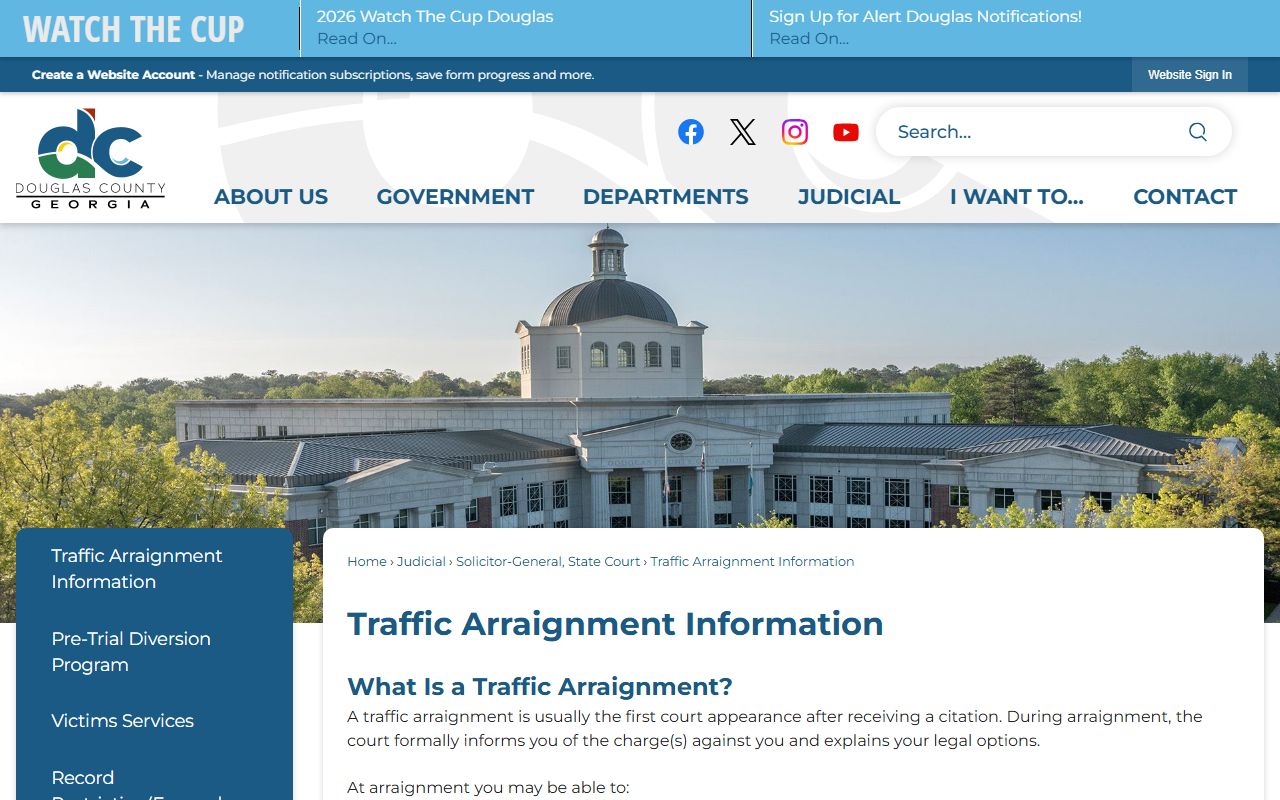
Traffic docket checks should be paired with the citation and court notice because payment eligibility does not always mean court is optional.
Douglas County Courts With Dockets
Douglas County docket access depends on jurisdiction. Superior Court dockets cover felony criminal matters, divorce, custody, title-to-land disputes, equity matters, and major civil cases. State Court dockets cover misdemeanor criminal cases, State Court civil matters, and county traffic citations. Magistrate Court dockets may involve small claims, dispossessory actions, garnishments, personal property foreclosure, bond hearings, preliminary hearings, and citizen pre-arrest warrant hearings. Probate Court handles estate, guardianship, marriage, vital-record, and weapons-carry matters through separate Probate Court access.
Municipal dockets are a separate local layer. Douglasville Court Services processes citations and misdemeanor state-law violations issued by Douglasville Police, ordinance cases from code compliance and animal control, probation violations, dockets, fines, and fees. Villa Rica Municipal Court handles city ordinance and state traffic offenses, including DUI, marijuana under one ounce, and misdemeanor shoplifting. Austell Municipal Court handles cases issued by Austell Police.
- Superior Court: felony, divorce, custody, equity, land, and major civil dockets.
- State Court: misdemeanor, county traffic, and State Court civil dockets.
- Magistrate Court: small claims, evictions, garnishments, bond, preliminary, and warrant-hearing dockets.
- Probate Court: estate, guardianship, marriage, licensing, and vital-record proceedings.
- Municipal courts: Douglasville, Villa Rica, and Austell city traffic, ordinance, and misdemeanor dockets.
Douglasville Court Services handles city traffic citations, misdemeanor state law violations, ordinance cases, code compliance matters, animal control citations, probation violations, dockets, fines, and fees.
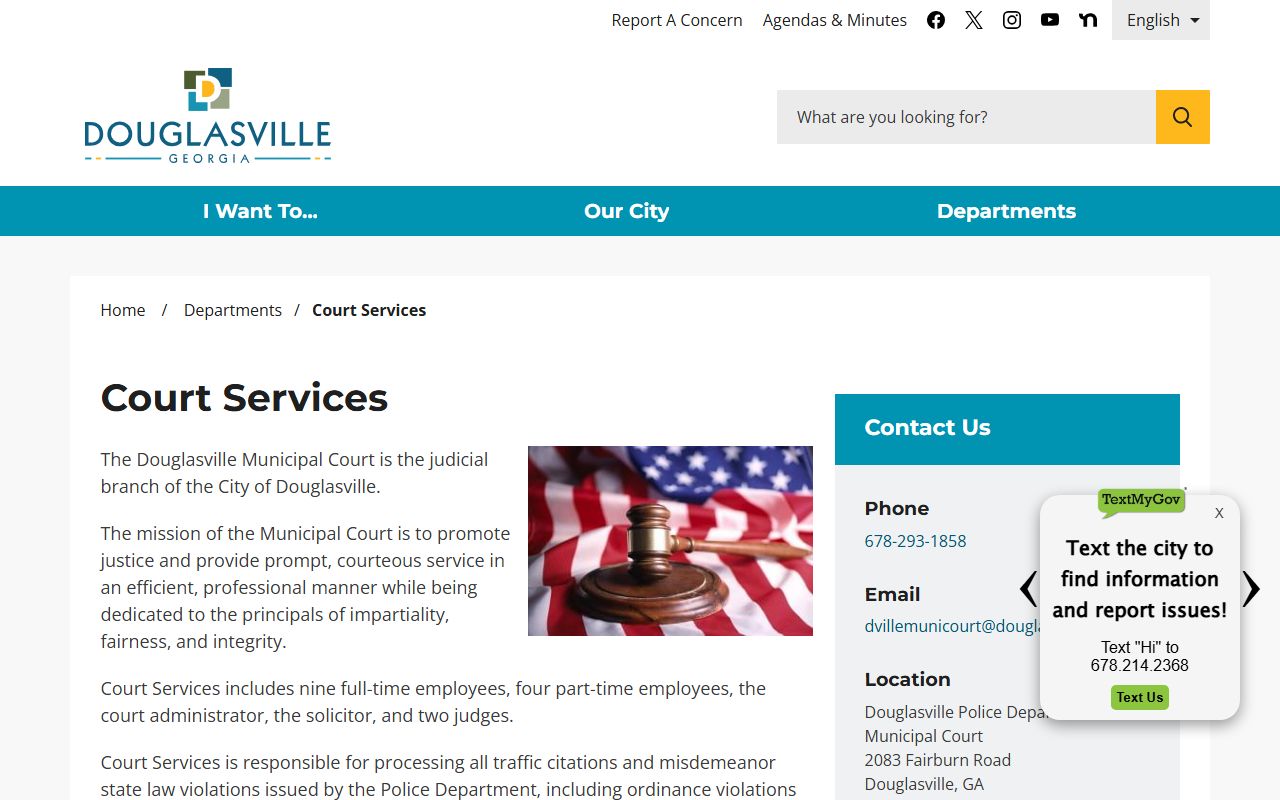
City court docket records should be checked with the city that issued the citation rather than assumed to be in county State Court.
Docket vs. Full Case Record
A Douglas County court docket is a roadmap, not the whole file. It can help confirm where the case is, what hearing is next, and whether a disposition has been entered. The full case record may include pleadings, motions, returns of service, orders, judgments, exhibits, sentencing documents, probation terms, and certified copies that are not visible from a docket entry. A certified copy should come from the clerk that keeps the original file.
Dockets are still valuable because they show movement. In a civil case, that movement can include service, answers, hearings, motions, judgments, and writs. In a criminal case, it can include arraignment, bond, motion hearings, plea, trial, no-show entries, bond forfeiture, disposition, and sentencing. In a traffic case, the docket or payment portal can show whether the matter is payable, requires appearance, or needs clerk contact.
| Docket | Full Case Record | |
|---|---|---|
| Format | List of entries | Full documents |
| Access | Often online and free | May require fee or visit |
| Use | Track case progress | Legal review, evidence |
Villa Rica Municipal Court is one example of a separate municipal docket source for city traffic and ordinance matters in Douglas County.
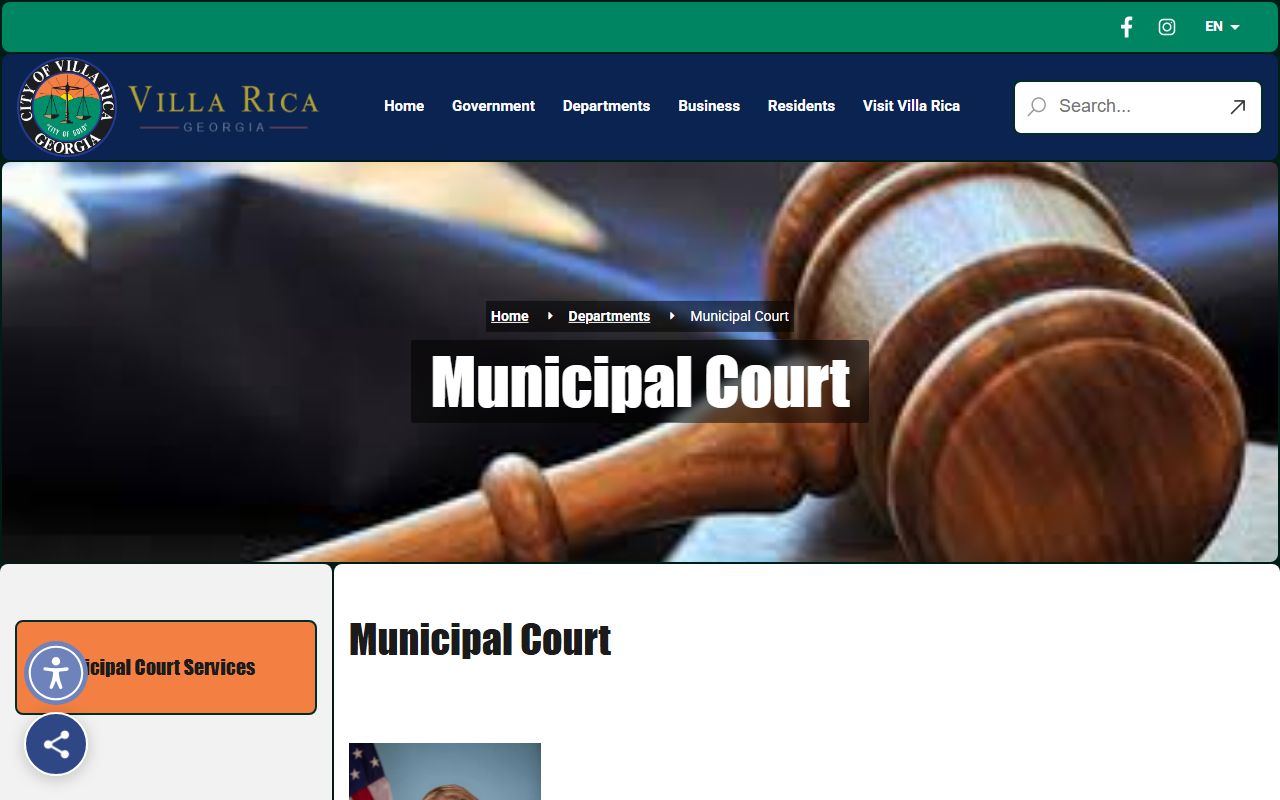
Villa Rica also forwards dispositions to Georgia DDS, which makes its court docket distinct from a state driver-history record.
Read Douglas County Docket Entries
Start with the case number and court name. A criminal case number using CR points toward a criminal file, while traffic and municipal matters may use citation numbers or city vendor identifiers. A docket entry for arraignment means the defendant is formally advised of charges and enters a plea. A bond hearing concerns release terms. A preliminary hearing tests whether enough evidence exists before some felony cases move forward. A disposition is the outcome of a case or charge.
For traffic dockets, use the citation date and court date exactly as shown on the ticket or appearance bond. Douglas County State Court traffic records use the State Court clerk and PayYourTix route, but Douglasville, Villa Rica, and Austell matters use city court sources. Austell Municipal Court, for example, handles traffic citations, ordinance violations, misdemeanor state law violations, dockets, and fine collection for Austell Police cases.
For bond and preliminary-hearing questions, Magistrate Court is often the hidden step. The research notes weekday morning bond hearings at the courthouse and Thursday preliminary hearings for jailed defendants when the case has not yet been presented to the grand jury or accusation. Those hearings may explain why a person appears in custody before the later Superior or State Court criminal docket shows a mature case record.
Austell Municipal Court is the official city docket and fine source for traffic, ordinance, and misdemeanor matters issued by Austell Police.
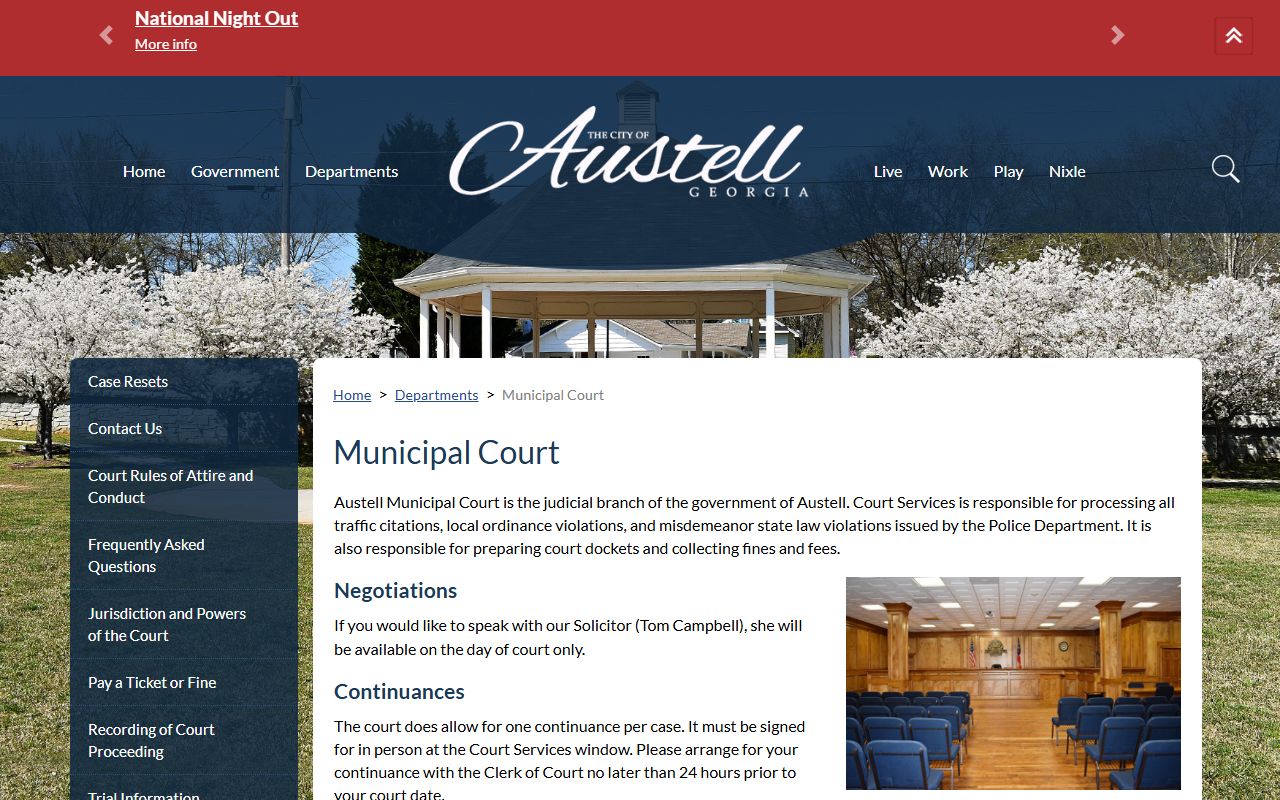
Austell's separate court page reinforces the main docket rule: match the issuing agency and court before searching.
Note: If an online docket is missing, call the correct clerk before assuming the case does not exist.